I’m currently reading The Essential Jonathan Edwardsby Owen Strachan and Douglas Sweeney, a compact introduction to the great pastor-theologian’s life and teachings. I may later write about the book as a whole, but my discussion here centers around a curious description from the authors about the Northampton revival Edwards presided over. If ministers in their preaching deviated from orthodox Christian truth and doctrine,
“[Congregants’] minds would grow confused, their hearts weak, and men and women would spiritually suffer even as God lost the glory due to Him. If churches held fast to truth… Christians would flourish and stand firm in their faith…. God, observing and orchestrating these events from His throne, would gain glory.” (p. 66)
I want to target the way that “God’s glory” is being used here. From what I’ve gathered, Reformed folks (including the authors) seem to have a certain notion of how God’s glory actualizes in the universe and in the lives of his creatures. I don’t have any disagreement with how they define God’s glory (see here and here for perspectives from New Calvinism). I am curious, however, as to how this glory actualizes under Reformed theology.
Part of Anselm’s ontological argument for God’s existence is that God is the “maximally great” being in the universe. Under this argument, God is the greatest conceivable being, so it is inconceivable that there is a being greater than God. Since God is maximally great, nothing can add to or subtract from his greatness. In the same way, assuming that God’s glory is an ontological property of his, we can say that God is the “maximally glorified” being as well, and thus nothing can ontologically add to or subtract from his glory. He is the Most High being, and the earth (universe) is full of his glory; his glory is timeless and necessary, so no creature can alter its essence or quantity. This train of thought regarding God’s glory seems uncontroversial among Christians, regardless of the debate surrounding Anselm’s argument.
It’s interesting, then, that the authors (both professors at prominent evangelical schools) speak of God “losing” and “gaining” glory. Are they invoking a different connotation of “glory” in this context? It seems unlikely. They may be using “God’s glory” as a stand-in for the awareness and recognition of God’s glory among creatures, but this would have been easy to just state in the first place. In what situation (or possible world) is this type of “glory” maximized–say, if Pharaoh never rebelled against God so that God might rescue the Israelites from slavery, would God have somehow been “less glorified”? In this instance I might be getting too picky with verbiage, but I have noticed that Reformed (or at least New Calvinist) folks talk about God’s glory like this often.
The Reformed idea is that God has predestined the eternal fate of all humans (and indeed every contingency in the universe), bringing about this destiny monergistically in people’s lives. I wonder if a primary motivation for this view is the assumption that, for God to have maximal glory, he must have predetermined everything, and be in absolute meticulous control of the universe? Is one reason Reformed folks bristle at libertarian free will that if there were any contingents not unilaterally determined by God (i.e. creatures making choices that go against God’s will/desires), God would cease to be maximally glorified, which is inconceivable?
If what I’ve said is true, there seem to be inconsistencies in Reformed theology’s understanding of how God’s glory works. Perhaps the discrepancy lies in the way New Calvinism has tried to repackage historical Reformed theology, and the traditional thinkers (from Calvin to Kuyper) have a more nuanced perspective. I don’t know the answers to these questions, so I would appreciate input in the comments, particularly from Reformed folks.
“This grand show is eternal. It is always sunrise somewhere…”
–John Muir
In August of 2019, my dad and I undertook our annual trip from our Wisconsin home to the western United States. I’ve previously written about my experience of the 2017 solar eclipse, which happened on one of these trips, and I want to share another transformative encounter with God’s creation.
In the southwestern quadrant of Colorado lies the rugged and remote San Juan Mountains, a subrange of the Rockies. It contains many of the state’s famed fourteeners, and was one of the destinations for our trip. One of these fourteeners, Handies Peak (14,048 ft), was tentatively on our radar to climb, but this was still subject to factors we would only know once we reached the area, such as weather, campsites, and road quality. In particular, witnessing sunrise atop a fourteener sat high on my bucket list. Arriving from Black Canyon of the Gunnison National Park, we pitched our tent at a county campsite on the shore of Lake San Cristobal, one of the largest natural lakes in Colorado, tucked in a mountain valley at 10,000 feet. From the lake, Handies is hidden behind closer, lower ridges, and to reach the trailhead requires driving up the valley on shoddy, high-clearance gravel roads. We had maps showing the lengths and endpoints of these roads, but we knew nothing of the road conditions. This was a crucial variable, given that these roads could be merely high-clearance, or so brutal that only the most intrepid 4WD vehicle could scale them. Hauling our trusty Subaru up the road to the American Basin trailhead, where cars must stop and the trail to the peak begins, took us 1 ½ hours from our campsite, despite being only 13 miles away as the crow flies.
We had originally ascended just to investigate the area, but once at the trailhead, we realized we had a decision to make. Based on the trail mileage and elevation, we should be on the trail by a perky 3:30 AM the next day to make the sunrise. This would mean that, should we return to our campsite for the night, we would have to be driving by 2:00 AM. For my dad and I, that seemed near-insane; it meant throwing our sleep schedule way off, navigating a treacherous gravel road in the dark, and exerting ourselves at 14,000 feet with only partial acclimatization (just a few days ago we were near sea level). Add to that the significant risk of a poorly-timed alpine thunderstorm preventing a safe climb. The only way to pull off a sunrise climb was to camp there at the trailhead for the night. Initially this seemed out of the question, given we had already pitched our tent at the lake. However, per usual for our trips, my dad stowed a much smaller two-person backpacking tent as a backup. In addition, while we would normally put camping gear in the bigger tent wherever we pitched it, a morning rainstorm spurred on my dad’s lack of confidence in the waterproofing sealant of that old tent. The result was our keeping sleeping bags and other tent items in the car which we’d just arrived in. Without sleeping bags in particular, a bitter night at high elevation would be intolerable. It appeared quite a stroke of luck that we had everything we needed with us, except sleeping pads, which remained at the lower campsite.
My dad was hesitant to commit to camping at the trailhead. It meant spending a night at 11,500 feet, violating the mountaineering mantra of “sleeping low”. Going without sleeping pads basically meant sleeping on the ground. Still, I was insistent that we should give it a try. Somehow he bowed to the ‘gut feeling’ of a 21-year-old male, and we set up near the trailhead, using the Subaru’s floor mats as sleeping pads. With that decision made we could properly appreciate how beautiful of an area American Basin is to camp (and to start your high-altitude real estate portfolio, if you have $600,000 to spare). To the south a sharp ridge of peaks forms the far end of the glacial valley’s bowl, and the broader bulk of Handies lies closer, forming one imposing wall of the basin. A creek bubbles through tiny rapids and pools, accompanied on its winding path by lush bushes and the few conifer trees persisting at this altitude. Vibrantly-colored late-season wildflowers blanket the valley in all their splendor, diligently attended to by pollinating insects. A couple wary but curious mule deer come close, apparently seeking salt in the cork of our hiking poles. Few places I have overnighted surpasses the tranquility and grandeur of the basin. Such a spectacle didn’t translate to sleep quality, however. Car floor mats are no substitute for real sleeping pads. Yet the greater hindrance to rest was the sheer anticipation of what we would attempt tomorrow.
We rose at 3:00 AM, suited up in winter-weather gear, scarfed down a breakfast of boiled eggs and a packet of granola, and hit the trail. The occasional appearance of the gibbous moon behind a mostly cloudy sky gave us some light beyond our headlamps. With temperatures around freezing and little visible to us in the predawn darkness, the journey upwards was a matter of trudging along one step at a time through dirt, scree, and snow. As we ascended, the clouds cleared, and the moon’s full illumination graced the emerging scenery. Gradually the towering basin walls towered less and less, and a landscape much more vast and intricate rose up instead. Watching the nearby valleys and faraway peaks of the San Juans fall into place in all directions as we climbed onto the basin’s ridge was a drama unparalleled in the work of the greatest playwrights. To use an illustration, it was something like walking through a cramped, dark cave tunnel that slowly opens up to a brilliant cavern filled with treasures of glittering crystals and hulking stalactites. Between the high elevation and the remarkable clarity of the sky, I felt so close to outer space that it seemed as if I could merely push off the ground and float among the stars. Despite how spectacular the landscape was, it would come to take on an even more magnificent appearance and character as the sun rose.
Reaching the summit itself felt like a triumph for both of us. At 14,000 feet, it was the highest elevation either of us had reached, no joke for us low-altitude Midwesterners. Standing on the peak was like a below-freezing wind tunnel, and our only shelter was to huddle by some rocks on the east side. We had about 45 minutes to spare before sunrise as we summited. Already a faint ruddy glow emerged in the east, but the alpine landscape was still shrouded in darkness. If you’ve ever carefully observed a sunrise or sunset from start to finish, you’ll notice how the light changes slowly, subtly, and then dramatically, before plateauing at either daylight or late twilight. We had the pleasure of watching (and photographing) this process from one of the most scenic locations in the country. We gazed as the few clouds in the distance began to glow, the dark veil over the land parted to reveal endless alpine scenery, and the whole of visible creation seemed to hold its breath for the inevitable climax. Finally, we witnessed that sacred moment when the sun emerged over the horizon, kissing the highest mountain peaks with golden-orange light.
The contrast of appearance, and even ethos, a location embodies during nighttime versus that it embodies during daytime is, well, a real night-and-day difference. You’ve experienced this if you’ve noticed how different a nighttime drive through an area feels compared to a daytime one. Genesis 1 recognizes that this separation between light and darkness is an archetypal feature of creation, a divinely ordained universal principle–and as God’s image-bearers, we can’t help but notice it throughout our phenomenological experience. As the golden hour passed and the sun’s light neared peak intensity, having witnessed the San Juan’s transformation from darkness into light, I began to perceive the full scope of this night-day dichotomy, at least from one point in space and time. Human words simply cannot do more than hint at the majesty revealed before us that morning–but the divine Word always seems to find a way.
If our eyes are open for it, we can see how God’s glory in nature proclaims the Resurrection of Christ, and the new life it promises for humanity and all creation. Even that most spectacular of sunrises was just the faintest hint of a far more glorious reality, a reality promised to us now and in the future. Indeed, the Son has risen, and all creation is renewed by his light. This Resurrection life is the real “grand show” behind all grand shows, and is the promise that the eternal Son will always shine everywhere.
A year ago on this day of the week, I attended an Ash Wednesday service for the first time. The sweeping Gothic architecture, resonating organ, and liturgical worship of Luther Memorial Church in Madison, WI presented a sharp contrast with the services of my charismatic heritage. But I certainly sensed the personal presence of God in that place. He was undoubtedly working on the hearts of His people through its sacramental and ceremonial nature. The experience deepened my appreciation for a different mode of worship than what I was used to, honed over centuries of tradition.
When I stepped forward to have the incense-imbued ashes spread on my forehead, the first thought that wafted through my mind was how nice they smelled. It seemed a trivial impulse compared to the sobering words of the ritual, “Remember that you are dust, and to dust you shall return.” As I reflected, however, this struck a chord in my mind. It so happened that the previous night our campus ministry small group had read 2 Corinthians 2 in our weekly Bible study. In this chapter Paul speaks of Christians being a sweet-smelling incense offered by Christ to God:
“But thanks be to God, who always leads us as captives in Christ’s triumphal procession and uses us to spread the aroma of the knowledge of him everywhere.For we are to God the pleasing aroma of Christ among those who are being saved and those who are perishing. To the one we are an aroma that brings death; to the other, an aroma that brings life.” (2 Cor 2:14-16)
By accepting and bearing this mark of ashes, we are not just making a visible profession of faith in Christ, but we are also making an olfactory profession, if you will. The sweet scent of the ashes lasted for a few hours as I went about the rest of my day, reminding me of this profession, and how it is a calling for me and every Christian to be an aroma pleasing to God, a sweet-smelling incense offered through the work of Christ to God, that we may be made holy in His sight.
Ashes represent destruction and death of the highest degree–there literally remains nothing of the former being but fine dust which is soon scattered and forgotten. This is the curse of sin and death on every one of our lives. Humanity and all creation once enjoyed full communion with God, but through the willful rebellion of God’s created human and spiritual agents, we have brought upon this world ruination and brokenness. We are but dust; we are the ‘hevel’ of Ecclesiastes, transient and evanescing like wisps of smoke. Yet from that ash and dust arises a sweet scent. It is the scent of peace, fellowship, assurance, and greatest of all, love. It is the scent offered by Christ to God on our behalf through His bearing all the world’s destruction and sin on the cross. It is the true victory that rises above and conquers principalities, powers, and death itself. It is the justification that empowers us to live as victors in Christ, that through Him we might be a sweet fragrance to our Father and to every divine image-bearer on this earth.
In the past decade or so, much attention has fallen on the burgeoning popularity of eSports, multiplayer video games played competitively in a sport-like context. The most popular titles are largely real-time strategy, fighting, or first-person shooter games, such as League of Legends, Defense of the Ancients, Counter-Strike, Fortnite, and Super Smash Bros, and the largest events take place in arenas with prizes in the millions of dollars. Through free streaming services such as Twitch, eSports has obtained a massive following from fans and gamers all across the world, and has even featured in mainstream outlets such as ESPN. Whether this phenomenon is properly described as a “sport” is contentious, but is not the matter I want to touch on presently. At the least we can recognize that video games are not merely outlets for casual entertainment, but can be as much a competition as, say, chess, or any other “game”.
There is another realm of competitive video games that receives much less attention: speedrunning. In this form, the goal is to complete a game as fast as possible, which in most cases means getting from the moment one starts a new game file to beating the final boss and/or reaching the credits roll. That broader goal breaks down into specific categories, such as “any %” (complete the game as fast as possible with no holds barred, usually taking advantage of a game’s glitches and ignoring all unnecessary achievements/sidequests), “glitchless” (complete the game as fast as possible without utilizing unintended glitches), and “100%” (complete all sidequests, obtain all collectibles, and/or otherwise achieve everything there is to achieve in a game as fast as possible, with or without utilizing glitches). To give an example, one of the most popular speedrunning games is Super Mario 64. Normally the player must obtain at least 70 of the 120 stars available throughout several levels to unlock the final Bowser fight and beat the game. However, a certain glitch allows the player to access the final boss with only 16 stars. This 16-star run would be an “any %” run, while a run collecting all 120 stars would be a “100%” run. (SM64 is one of the best games in which to race against other players–check out this video for an example.)
One unacquainted with the competitive video game world might observe analogies from traditional sports to gain some understanding. Where one could think of tournament eSports as analogous to a boxing match or a basketball game, speedrunning is analogous to a decathlon or an elaborate gymnastics routine. eSports involves team-based strategizing and coaching, as well as predicting and reacting to an opponent’s actions in real-time; speedrunning focuses on “frame-perfect” (i.e. extremely precise, and often successive) inputs and finding intricate ways of whittling fractions of a second off one’s personal best time. Both require hours upon hours of technique practice and mental and dexterous preparation to master. The process of setting new records in speedrunning often involves improvisation and the discovery of more efficient routes or techniques, and so parallels, for example, setting speed records in mountain climbing (such as the fastest time to climb from base camp to summit and back on Mt. Everest using a certain route). For a sense of how this plays out, Summoning Salt is a YouTube channel dedicated to presenting speedrun record progression in a documentary fashion–anyone who played these games as a kid like I did will greatly appreciate these videos’ narratives and attention to detail. Just like how different mountains take different amounts of time to climb, times for speedruns between different games can vary extensively; the best speedrunners of the original Super Mario Bros. post sprintlike sub-5:00 runs, while most Legend of Zelda games are multi-hour marathons. Some of my favorite mostly casual-friendly speedruns: Mariokart Wii (a Tool-Assisted Speedrun), Majora’s Mask, Minecraft, Super Mario Bros. 2.
Much of my reason for writing on these topics is seeing the connection between two activities central to my personal heritage–sports and video games. I had little experience with team sports throughout my school career; my athletic investment was almost entirely with swimming and running. Just as team sports such as soccer and basketball are far more popular overall than individual sports such as swimming or cross country, in the video game community watching pro gaming tournaments has drawn far more attention than watching speedruns. It seems to me that this is largely the case for similar reasons–briefly, that team-based sports/games tend to be more accessible to new and casual viewers than individual sports/games, games played at tournaments tend to already be immensely popular, and on a deeper level the struggle of two sets of human wills against each other may be more compelling to most people than that of one human will against a clock. Marketing and cashflow further widen the difference in popularity.
Having said all this, I come to a question that I always wrestle with when thinking about video games: are they, in most respects, at best merely entertainment and at worst a colossal waste of time? Are all the hours speedrunners pour into honing their craft really just being poured down the drain–and if so, how is this different than the time any athlete dedicates to their sport? I don’t think the answer is as straightforward as either gaming’s junkies or detractors would like to claim, and as such I will only scrape the surface of a response here. There is obviously the fact that sports provide excellent health benefits, and playing too much video games is quite unhealthy. Beyond just physical activity, however, I have elsewhere both given and subsequently critiqued an argument for video games as art–given the right kind of game, a player may certainly have a deep aesthetic experience, and most would say this is time well spent. The “art” present in speedrunning, however, is not really this kind of art, but instead is a colloquial reference to the same phenomenon that appears in sports: masterful technique, execution, and success in doing a certain move, play, or routine. For those knowledgeable about the sport or video game, witnessing such an event is among the most thrilling moments of spectating. These are the moments that captivate all eyes in real time, and are replayed over and over after the event.
While what I’ve started to lay out may make speedrunning and games at large more worthwhile, it still leaves another big question mostly unanswered. One of my favorite verses in the Pauline corpus is 2 Timothy 4:7: “I have fought the good fight, I have ran the race, I have kept the faith.” It’s a classic among Christian athletes. Without a doubt, the perseverance, camaraderie, and life lessons developed in competing in sports are an excellent framework for understanding the journey and sanctification of a Christ-follower. This is the idea Paul is drawing on in this passage. Can competitive gaming really fall under the same framework–is there any biblical application available here? I’m pretty positive towards video games, and it sounds a little absurd even to me. I suppose that, only to the extent competitive gaming shares the relevant qualities with sports, the tentative answer is yes. Certainly video games, in their own right a medium like cinema and literature, are still fraught with controversy, such as their often violent and explicit content and addictive potential, that sports (in themselves) are not. But if there’s one principle we as Christians hold to, it is that nothing is beyond redemption by our God. As I would argue, gaming’s fusion of media- and sports-like qualities makes it a wholly unique platform for such redemption to possibly play out. To the skeptics out there, I might say that if rap music can be redeemed for Christ, surely video games cannot be too far gone. Obviously, the question that follows is how the redemption of video games actually happens–I’ll have to leave that one open for the time being.
For now, on this issue I’ve hit the limits of the thought I can provide outside my own experience; the more I try to ponder it, the more fuzzy facets of analysis I see that need clearing up. What I will say is that the narrative, problem-solving, and sense of adventure I experienced in playing video games as a kid remain deeply formative and positive memories. I’m certain that I distilled something quite significant by delving into these virtual worlds, and it may just take me a lifetime or longer to be able to articulate and understand exactly what that is.
Underlying Christian discussions about the nature of salvation are philosophical assumptions about possibility and the nature of God. We often are trying to square Christian doctrines with philosophical consistency when we discuss how individuals are saved, and this is a worthwhile goal. Therefore, evaluating the philosophical worldviews we each bring to both the biblical text and our systematic theologies can be helpful in getting us past the deadlocks that come with proof-texting.
What I’m embarking on here is a brief attempt to frame my own soteriology within a coherent philosophical framework while also articulating the philosophical implications of Reformed soteriology. To start off, I want to discuss what is meant in philosophy by logical possibility. Succinctly put, a proposition (i.e. a claim or belief) is “logically possible” if it does not violate the law of non-contradiction. For example, it is logically impossible for there to exist a married bachelor, because the identifiers “married” and “bachelor” are mutually exclusive. One cannot simultaneously be both married and a bachelor–that would be a contradiction in terms. While this idea is straightforward enough, it actually leaves significant room for propositions that we would call “absurd” or “impossible” in common speech. For example, say I propose that flying, 500-foot-tall, neon-pink elephants live on Neptune. At first blush a reader might reply that it is impossible that my proposition can be true. This is correct in the common sense of “impossible”, but in the field of modal logic, one could merely state that this proposition is immensely improbable. There is no logical contradiction in the proposition. But, in our experience, is the proposition ever actually true? Of course not–technology permitting, we could travel to Neptune and show that it is empirically false. Note that we go about our daily lives fully (and indeed subconsciously) confident that events that are immensely improbable, but logically possible, will not actually occur–even though it is logically possible that I could return to my home in Wisconsin to find a man-eating lion right behind my front door, I know that this event is so improbable that it will not actually occur.
With the groundwork laid, we can now discuss how logical possibility applies to soteriology. As one who believes that the salvation Christ died for on the cross is available for any individual to accept or reject, I claim that it is logically possible that all individual persons who have ever lived could be saved. One could logically conceive of a possible universe in which both the biblical rebellion of Genesis 3 onwards occurs and all individuals come to salvation and restoration into a right relationship with God. It is crucial to note that I am not arguing for universalism. While I say that it is logically possible for all individuals to be saved, I also say that it is immensely improbable; that is, it is not actually the case that all individuals are saved. The universalist would claim that it is not just probable, but that it actually is the case that all individuals are saved. The language of logical possibility allows one to surely avoid this pitfall. Furthermore, this is consistent with the standard Arminian doctrine of unlimited atonement.
Calvinist soteriology, to be consistent with two of its key tenets of limited atonement and unconditional election, would have to say that it is logically impossible that all individuals could be saved. According to the Reformed view, it was God’s sovereign will to elect some individuals to salvation (and damnation, under double predestination) “before the foundation of the world”. This view also holds that God’s sovereign will is wholly inviolable and will certainly come to pass, where God’s sovereign will is defined as meticulous omnicontrol (e.g. R.C. Sproul, London Baptist Confession 3.1, Westminster Confession 3.1). Indeed, if any event occurs outside or in violation of God’s will, this God would not be the God of the Scriptures at all (Sproul again: “If God is not sovereign, then God is not God”). Reformulating this line of reasoning, it is logically impossible that any event that God sovereignly decrees to come to pass does not actually come to pass, for otherwise God would not be God, which is a logical contradiction. Since God sovereignly decrees salvation only for a limited number of individuals, it is therefore logically impossible, under Calvinism, that all individuals could be saved. To put this conclusion in perspective, it is worth reiterating how stark and “hard” logical impossibility really is. If a proposition is logically impossible, it is “so” impossible that not even God himself could “make” it possible, for God is the very logic or Logos upon which the universe is based (this isn’t to impugn divine omnipotence–think about the classic question of whether God can create a boulder so heavy that he cannot lift it).
Let’s pause and summarize what we’ve concluded thus far. As it regards logical possibility, two options are available for Christian soteriology: either it is logically possible for all individuals to be saved (“Arminianism”) or it is logically impossible for all individuals to be saved (“Calvinism”). I would expect this dichotomy to be unobjectionable for adherents of either side–it merely emerges from the natural implications of their respective theologies. Given that we accept this distinction, we must now consult the final authority on theological matters–the Bible. This is not a straightforward task; I have elsewhere written on the problems with proof-texting and the last mistake I want to make is to use some bullet-point selection of verses to fortify a broad theological worldview. In this exercise I would like the reader to set aside all prior theological convictions and focus on one question, and one question only: applying the framework of logical possibility to soteriological texts, do we find that it is either logically possible or logically impossible for all individuals to be saved? Let’s look at a few passages:
“Therefore, although God has overlooked such times of ignorance, he now commands all people everywhere to repent,” (Acts 17:30 NET)
“Such prayer for all is good and welcomed before God our Savior, since he wants all people to be saved and to come to a knowledge of the truth.” (1 Tim 2:3-4 NET)
Before we continue, I’d like to restate that I am well aware of the perils of proof-texting. I can’t wade into the depths of context and hermeneutics with these passages in this space without losing the purpose of this essay, so I encourage readers to investigate the hermeneutics of these verses themselves to determine if my argument is valid. Again, with these texts I am only focusing on whether or not it is logically possible for all individuals to be saved. I am not trying to argue that the entirety of “Arminian” theology is correct and that the entirety of Reformed theology is false.
If we accept the framework proposed above–which has been derived from standard, confessional Reformed doctrine–Calvinism has an immense burden to harmonize these texts with its soteriology. If it is logically impossible for all individuals to be saved, is it coherent to also hold, as Paul does, that God both desires and commands all people everywhere to repent? This “want” and “command” do not have to be part of God’s actuated decree–even if we introduce the distinction, as Calvinists often do, between what God would like to have happen and what he decrees will happen and put these verses in the former category, the problem remains. Would God possess a desire to actuate a proposition that is logically impossible, and would he command an action that is logically impossible? For God to command an action that (under Calvinism) he has already decreed as logically impossible does indeed seem as if God is contradicting himself.
For now I will conclude this investigation of the intersection between theology and logical possibility. There are other theological implications for which this framework of logical possibility seems applicable, such as the nature of original sin–for example, whether or not it is logically necessary that every human being has sinned. Whether or not the reader agrees with the schema I’ve laid out, I hope it can be a new and fruitful avenue to travel in the broader discussion about soteriology.
Ten years of my childhood and adolescence were spent participating in competitive swimming. It was by far my strongest extracurricular commitment, extending year-round in both club and high school programs. Through it I learned priceless life lessons and cultivated a habit of applying focused, determined effort to tasks. It also became a central part of my identity and value as a person, which, as anyone who has placed their self-worth in earthly pursuits can attest, was not such a good thing. There is a lot I wish to say in the future about my experience with swimming, but I want to start with a realization I came upon after first gaining some understanding about the deep symbolism present in the Genesis creation narrative and other areas of the Bible, and its thesis about the ontological nature of humanity.
Our God-given commission, according to Genesis, is to “Fill the earth and subdue it! Rule over the fish of the sea and the birds of the air and every creature that moves on the ground” (Gen 1:28 NET). In some respects we have done this thoroughly–think of how, for example, we have bred crops to be much more productive than they were in the wild–and in some respects we have gone too far, damaging parts of God’s creation instead of stewarding it. There is one element, however, which we have not really conquered, though we may think we have: water. We have navigated it, desalinated it, dammed it for power, watered countless crops with it, and purified and distributed it to millions of homes. But in facing it directly, in meeting water as it is in its essence, it dominates us. Instead of the elevated position and unfettered movement our bodies have on land, in water we find ourselves plunged into a viscous, hampering environment, with awkward locomotion and no solid surface on which to center ourselves. The head, where our consciousness is physically manifested and through which the God-given breath of Genesis 2:7 enters and animates our being, is mere inches from submersion it cannot long survive. Here already we are walking a figurative tightrope of order over the churning chaos in the pit below. Even in a public pool, where the water is entirely transparent, sanitized, and contained, we are still so close to the brink of possible death that we require specially trained individuals to supervise us constantly and guard our lives from being devoured into a watery grave. (That there are some 320,000 drowning deaths worldwide each year should give us additional sobering perspective.)
The creation story of Genesis 1 is one of separation. When God separated the waters and the land, he saw that it was good. He then created humans out of the dust of the separated, dry earth. Our natural environment, where we feel most secure, is the solid ground from which we emerged. In a symbolic sense, the reason that water is such a dangerous, alien environment to us is because in entering it we are undoing that original separation of land and sea. Plunging into the primordial depths, we get a sense of the uninhabitable state of creation prior to the divine Logos calling into existence the firm, terrene foundation we now take for granted. One way the Hebrew scriptures expressed this shadowy turmoil was in the form of Leviathan, the great sea monster which, while part of God’s creation, is immensely powerful and impervious to men’s efforts to either conquer or understand it (see Job 40-41). This mythopoetic illustration of water becomes literal reality in the New Testament when in Matthew 14 Jesus, the incarnate Logos, calls Peter to walk on the water of the raging Sea of Galilee. Peter’s temporary triumph over the chaos is contingent upon his faith in the Master of the sea, and when he becomes afraid and begins to succumb to it, only the Master can save him. After the resurrection–the apex of Christ confronting the ultimate chaos of death and emerging victorious–this reality is extended to every believer through water baptism, as the apostle Paul tells us: “We were therefore buried with him through baptism into death in order that, just as Christ was raised from the dead through the glory of the Father, we too may live a new life” (Rom. 6:4). That water is the representative medium through which the Christian ventures from death to life and from chaos to order in baptism truly solidifies the liquid’s high meta-symbolic status. More biblical examples abound, but I think from these water’s extensive role in the biblical canon is clear.
When I understand swimming through this lens, I develop a much deeper respect for the sport itself and the experiences I underwent participating in it. All sports, particularly physically strenuous ones, are instances of death and rebirth, of confronting the chaos of potential and transforming and streamlining it into order. This happens in training, where kinesthetic energy is guided into technique through repetition, where mistakes can be made and corrected–it is a lengthy, grueling process to which athletes must give their full diligence to improve. I would argue that swimming, however, has unique dimensions of this archetypal reality that other sports do not. Terrestrial sports maintain our familiar senses: you feel the sweat dripping from your brow and the steady heave of your diaphragm; you see the ball, opponent, or finish line in front of you; you hear the shouts and cheers of teammates, coaches, and spectators. The chaos of underwater submersion sweeps away these senses and replaces them with dull, otherworldly ones. All you hear is the water rushing past your ears, which soon becomes background noise; you must abruptly lift your head out of the water to breathe at all; you can’t even tell how much you are sweating; and watching the black line on the bottom of the pool through fogged-up goggles offers few signs of progress towards a goal. By dismantling and re-colonizing the senses, swimming brings one’s consciousness deeper into the watery chaos, and therefore forces us to be properly ordered and grounded in order to succeed.
Because swimming is low-impact on the joints, the limit to how much you can swim is theoretically governed by how long your muscles can function before giving out. This allows for practice periods that are a good deal longer than other sports. High school swimmers will go for two to three hours every day six days a week, and my high school team had brutal four-hour practices on certain days of the year. Collegiate athletes and Olympic swimmers, of course, train significantly longer than even that. For all that physical exertion, even more mental fortitude is required to survive and thrive in such circumstances. To conquer the element that is defined by flow, we must ourselves enter the “flow state”, in which we are untethered from mundane preoccupations and fully invested in the goal ahead of us on every level of our consciousness. It is a trancelike state, where we are entirely at one with the task at hand; it is rooted in what we already know and experience, but it must also push us far beyond the familiar, towards the highest threshold of our capacities. This is much like the way of living to which Christ calls his followers. Like he did with Peter, he beckons that each of us walks on the very edge between order and chaos, and with every step closer to him transform the personal chaos inside ourselves and the environmental chaos around us into order as he empowers us–this is the lifelong journey of Christian sanctification and theosis.
There is one more facet of this aquatic sport that enables the straddling of the order-chaos dichotomy, and I believe it does so as clearly as it is possible for humans to perceive: open water swimming. This removes all artificial taming constraints and ordering mechanisms that we otherwise impose on water and meets it in its most primal state, the same state in which God first spoke it into existence. The comforts of clear water, still surfaces, and proximity to dry land have no place in the vast lakes and oceans in which this swimming takes place. Competing in a number of open water races has given me firsthand knowledge of how much closer open water swimming is to the archetypal chaos. Without the wide black line on the bottom and with the potential for wake across the water’s surface, swimming straight is a near-impossible task. Thus, a technique known as “sighting” is employed, where every several strokes the swimmer lifts his head forward to visually track a distant object in the direction he wants to go. In races this object is typically a large fluorescent-colored buoy. For open water swimmers enduring the travail of the miles-long open water race, this buoy–often a speck several hundred meters away throughout the race–is the sole, faint source of order and direction. I’ve found that distance swimming in general, due to its very repetitive nature, induces the flow state rather easily, but I have nowhere else plunged as deeply into the “zone” as I have with open water swimming. To put it abstractly, the reason for this seems to me to be a total removal of any frame of reference with which to compartmentalize and process the environment–that is, any notion of separation and categorization that became otherwise inherent to the universe as the seven days of creation progressed. Thus, the open water swimmer must revert to the only skill he possesses that will keep him alive, bring him to the finish, and carry him through the all-encompassing, unadulterated chaos in which he can be no more fully immersed.
Some of these musings of mine might only resonate with the crazy few who, like myself, enjoy jumping into a cold, dark lake or ocean and swimming miles on end. Much of this writing has helped me process the integration of my experience in competitive swimming, and my emerging understanding of biblical chaos-order archetypes, across the temporal distance that separates them. I hope it has been a helpful and interesting look at how this chaos-order dynamic has played out in my life.
I wrote the following essay for a philosophy class titled “Contemporary Moral Issues”. One of the main units was about the morality of abortion. Though one might think that a class at a major campus (UW Madison) in one of the most progressive cities in America would be anything but balanced, the arguments presented were more fair and nuanced than I expected. It helped our class get beyond the surface-level talking points that pervade political discussion, and that’s a blessing in itself in this day and age. Here I’m responding to a paper by Don Marquis, who posits a secular argument against abortion (unfortunately I can’t find this paper available for free viewing online, but here is where it was published). While ultimately agreeing with his conclusion, I respond that one cannot excise the religious and metaphysical from any debate regarding the definition and value of human life.
Rampant within the popular abortion debate are platitudes and weak arguments. In the first section of his paper, Why Abortion Is Immoral, Don Marquis dismantles such arguments, and demonstrates that there is more philosophical nuance to the situation than demagogues on either side assume. In my opinion, however, Marquis quickly runs into problems when he tries to formulate his own argument. The quandary I speak of is, in fact, endemic to all of the pieces about abortion we have read in class, though Marquis makes it most explicit in his argument. This most fundamental assumption is that human life and its attendant experiences have intrinsic value, an assumption made without a necessary underlying value framework.
I do not disagree with the assumption–I contend that Marquis makes the assumption without any epistemological base. Additionally, I contend that the assumption that human life does have value, and how we arrive at and implement that assumption, is utterly essential for discerning the morality of abortion. Quoting the relevant section of his piece, “The effect of the loss of my biological life is the loss to me of all those activities, projects, experiences, and enjoyments… [which] are either valuable for their own sakes or are a means to something else that is valuable for its own sake… When I am killed, I am deprived both of what I now value which would have been part of my future personal life, but also what I would come to value. Therefore, when I die, I am deprived of all the value of my future. Inflicting this loss on me is ultimately what makes killing me wrong.”
Implicit but obvious in this line of thinking is that human life and its experiences have high and intrinsic value. What, then, are the standards by which we judge that human life has value? Marquis himself seems conflicted in his argument. To extend this to the abortion debate, his conception of value must apply to pre-birth human life generally; that is, it must be an objective standard. Yet he also uses language such as “what I now value” and “what I would come to value”, indicating that value is a subjective phenomena determined by the agent who possesses it. Which is it, then? The objective and subjective are, by definition, mutually exclusive opposites. If we stick to an objective standard for the value of human life, then what or who defines the standard? The government? A group of “experts”? A popular vote? Humanity has already experimented with trying to define human value on its own terms, and the tragic results are the Holocaust, the Rwandan genocide, the famines caused by Soviet and Maoist communism, and myriad other atrocities. Thus, I think it is clear that we cannot define on our own terms the value of human life. Nor can we take the position that the worth of human life and its experiences is subjective and determined by the possessing agent. For if we do, we have no grounds to say to Hitler that murdering six million Jews is wrong–if he determines that it is a valuable activity for himself, we have no justification to stop him.
Herein lies the fatal flaw in Marquis’s argument. He does not articulate any underlying value structure for his contentions. This is probably out of expediency, as he likely assumes that readers will share the assumption that human life has great intrinsic value. But if this is not the case, not only is abortion completely permissible, but so is any act which we would otherwise categorize as moral evil. It is logically incoherent to assume that human life has value without a value structure to inform us–without such a value structure, we are left to conjure moral values and duties out of thin air, based on transient subjective emotions and gut instincts. Thus, to be logically consistent without a value structure, we must instead assume that human life does not have intrinsic value, and then we are left with hard nihilism and no morality. Therefore, because Marquis does not assume or argue for any underlying value structure, his arguments are incoherent.
I would be remiss if I criticized Marquis’s argumentative failings and did not propose a remedy of my own. We cannot derive the value of human life from science–the question regarding the value of human life is both a metaphysical and moral one; while science can give us the “is”, it cannot give us the “ought”. Nor, I would assert, can we derive the value of human life from philosophical argumentation alone. Good philosophy is grounded in a degree of systematic objectivity and the assumption that human reason can help lead us to universal truth, but in practice philosophy has a deeply subjective streak. Two philosophers studying the same subfield can come to vastly different conclusions, a phenomenon that does not occur in science, and the popularity of any given strain of philosophical thought has ebbed and flowed throughout the centuries.
What are we left to work with, then? As a Christian myself, and following in the tradition of 3000 years of Judeo-Christian history, I put forth the ancient proposition that human beings are created in the image of God, and therefore their lives and experiences have an intrinsic value, a value far exceeding any other in the material universe. Now this is, of course, a religious, metaphysical, and ontological argument, not strictly a philosophical or scientific one. There is much to dissect about this claim, and a thorough, proper treatment would require many books’ worth of discussion. To convince the skeptic of this claim is far beyond the scope of this paper, and so I will not attempt to do so. It will have to suffice to say merely that 1) as I have demonstrated above, other modes of thought are insufficient for evaluating the claim of the value of human life; 2) there are sound philosophical arguments and scientific inferences that support the existence and certain attributes of God (see, for example, Aquinas’s Summa Theologica); and 3) it is the state of humanity’s affairs–lest we become nihilists–that every individual must fill his or her life with some deeper purpose, and the pursuit of that purpose is in fact “religious” or “spiritual”, whether or not it falls under a systematic institution of religion. Therefore, it is not an irrational or illogical move in itself to assume a metaphysical-religious substrate when engaging in philosophical discourse.
More important to the present discussion is that this claim–that all human beings are created in the image of God–solves the issues present within Marquis’s assumptions of the value of human life and experiences. First, it is an objective, universal standard that applies to all humans regardless of race, age, location, or other discriminating characteristics. Second, it is a value structure that is based outside of fluctuating and fallible human standards, and thus cannot fall prey to the abuse of human reason and subjectivity. Third, it defines ontologically the essence of what it is to be human: that we are endowed with certain capacities, rights, and duties that reflect the transcendental and effectuate the well-being and flourishing of humanity. Regarding the matter at hand, my intention in outlining this argument is not so much to convince the skeptic, but instead to demonstrate that there is a coherent value framework with which we can answer the question of the morality of abortion, as well as the morality of any given action. I am attempting to go a step beyond Marquis in argumentation; he merely assumed the value of human life, while I propose a framework with which we can base that assumption in metaphysical reality.
With the foundation laid, I can now draw a conclusion regarding this discussion, which is in fact in agreement with Marquis; namely, that abortion is deeply immoral. It is the destruction of a being who has been created by God possessing his image, and is thus an affront to him. It is also an affront to humanity, for it deprives the aborted individual of life itself, the greatest gift which is given to all people. Lastly, it is indeed true that abortion is immoral because it deprives a person of a “valuable future like ours”, as Marquis claims. However, without the underlying value structure that I have posited, that last statement is incoherent, and thus in my assessment Marquis does not provide a sound argument.
Among the most popular political pundits today is Ben Shapiro. Commanding the attention of tech-savvy millennial and Gen-Z conservatives, he is at the forefront of the burgeoning Internet-based conservative movement currently succeeding the Rush Limbaughs and Sean Hannitys of talk radio and cable TV.* In Shapiro’s most recent book, The Right Side of History, he outlines the foundations of Western civilization, locating them in two paradigms: that of Judeo-Christian morality, concretized in Jerusalem, and Greek teleology and reason, concretized in Athens. He further breaks these paradigms down into four categories, each of which a thriving civilization must have: individual moral purpose, individual capacity, communal moral purpose, and communal capacity. He argues that all are necessary for true happiness.
What stands out in reading this book is how similar Shapiro’s narrative and argumentative process are to those of the late evangelical thinker Francis Schaeffer in his cultural critique How Should We Then Live?. Both trace the millennia-long development of faith and reason in the Western intellectual tradition, arguing that it is generally a series of amalgamations and improvements, culminating in a specific event where these improvements reach their apex. For Shapiro, this event is the founding of the United States; for Schaeffer, it is the Reformation and its fruits. For both, the decline comes in the progression from the radical Enlightenment of Voltaire and Rousseau, to the idolatry of reason in the French Revolution, to the rise of secular humanism, existentialism, scientism, and postmodernism, and finally to the dominance of subjectivity and the abandonment of personal morality on college campuses. Both authors produce compelling arguments for the ultimate absolutes that are the grounding for not only moral values and duties, but also for God-given individual and collective teleologies.
The two accounts are not identical, of course. Shapiro obviously has the benefit of 43 additional years of history, as well as direct experience with the furor of the radical campus Left. Their respective interests lead Shapiro to focus more on political developments and Schaeffer on the evolution of Western thought through the conduit of art. Schaeffer is more pessimistic and eschatological in his assessment, and his wariness of anti-Christian authoritarianism and mass manipulation runs deep throughout his work. In many ways he believed in the coming of a new, technologically-driven Babylon, whose elites cast themselves upon the altar of secularism and bid their cultural subjects to follow suit.
There are two reasons I bring How Should We Then Live? into the discussion about Shapiro’s cultural commentary. First, TheRight Side of History is a light yet diligent trace of the story of the West, and is an essential addition to the collection of every God-fearing person who cares about sustaining and improving this civilization. However, it is deficient in at least one crucial respect, and Schaeffer’s own masterwork, in a complementary fashion, works towards the remedy. Schaeffer pursues the theological implications of the crests and troughs of Western civilization with a depth and precision that Shapiro lacks, and in a way that the thinking Christian will deeply appreciate. For all his compelling discussion about teleology, what Shapiro, as an Orthodox Jew, cannot do is recognize the ultimate telos of humanity present in and through the person of Christ, on whom all history pivots. Shapiro holds divine revelation in utmost regard, given that it is the base upon which Judeo-Christian morality is built, but his theology is incomplete without the ultimate revelation, the God-Man Himself.
Second, the similarities between the accounts of Shapiro and Schaeffer indicate that there is, or at least can be, a strong cultural alliance between orthodox Christians and traditional religious Jews. This is no small feat, considering the atrocities committed against Jews by Christians throughout history. In America today, cultural forces are trying to curtail any sense of proper sexual morality, religious freedom, and sanctity for the unborn. Around these decisive social debates, Christians and Jews can occupy common ground in opposition to the secular juggernaut. In a similar way to how the rise of modern secularism (in addition to the changes of Vatican II) has brought formerly inimical Catholics and Protestants together on the basis of common values, perhaps we are seeing a similar process take place between Christians and Jews around the recognition of a shared Judeo-Christian framework. Of course, this Jewish-Christian cultural alliance hits hard limits once we wander into theology, teleology, and faith, and these limits cannot be overcome anywhere close to the degree that those between Protestantism and Catholicism can. The Jewish rejection of Christ as God and Savior, as long as it remains, allows for sparse theological agreement. All the same, both Jews and Christians can be grateful for the blessings of America and the West, and can stand side by side in defending the values that made those blessings possible.
Given the immense shared cultural heritage and moral systems between the Jewish and Christian worldview, outside of the theological realm my criticisms of The Right Side of History are few, and my acclamations of it are many. If you are seeking a brief but concise narrative of the successes, stumblings, and contemporary struggles of the West, Shapiro’s latest work is an excellent resource.
* Shapiro’s day-to-day work is in current political issues, and while he is one of the more level-headed commentators out there, politics certainly isn’t everyone’s cup of tea. Whether or not this is you, I would recommend his more wide-ranging Sunday Special series of interviews–there’s a conversation for everyone here, including a few with some of today’s most influential Christian thinkers.
What follows is a paper I wrote for a class I took my first semester of college in the fall of 2017, titled “Philosophical Reflections on Science and Technology”. The class itself was my first formal introduction to the philosophical mode of thought and dialogue–we read writers such as Martin Heidegger, Jacques Ellul, and Neil Postman. This paper was intended primarily to demonstrate that video games can be an art form, and also that video games are unique among art forms for their level of immersion. My thought has evolved substantially since I wrote this, and I see both places to poke holes in my arguments and ways to extend them further. One crucial element of intellectual development is dialogue with my past self, a kind of individualized, progressive dialectical process, so here I’ll try to engage in that. To best facilitate this dialectic, I have not edited the paper at all in the two years since I finished it, so naturally there are a few things I would have worded better to get my point across.
Video Games: Culmination of Artistic Immersion
Art is among the preeminent pursuits and achievements of humanity. Over the centuries, the concurrent development of technology, and its gradual melding with art, have consistently advanced the human capacity to produce novel and profound works. In the contemporary age, we now behold the result of this fortuitous fusion of two fields: video games. For the first section of this analysis, I will establish that the expressive and aesthetic qualities of video games validate their status as an art form. I will continue by contending that, by virtue of their experiential potential and bestowing of agency upon the player, video games assume a level of immersion unsurpassed by any other artistic medium thus far. In the last section I will examine and refute objections to video games as an art form and their unique position as an artistic medium. These arguments will be to explain why video games offer an unprecedented opportunity for developers and players alike to enjoy the fullest artistic experience yet conceived.
Though art encompasses a broad range of human activities, a universally accepted definition is that it is expressive. In addition, art spurs within its creator and observer a strong emotional and often intellectual response. Paintings, sculptures, music, novels—all these embody both qualities, and thus we consider them art. What so convincingly cements video games as an art form is that they combine every more traditional art form into one artifact. On the visual side, there is contention over whether early 8- or 16-bit games demonstrate human expression or are just the product of hardware limitations. However, with the advent of high-speed graphics processing, the worlds inside the mind of the game designer have come to life just as those of the painter or sculptor. Games such as Halo and Journey feature stunning landscapes and imagery, and use 3D modeling to produce stylistic and dynamic character and enemy design. Adding to this, games contain musical soundtracks and scores that could stand alone as eminent compositions. The Legend of Zelda, an adventure/puzzle game series, employs an entire orchestra to arrange the soundtracks for its games. Just as a vivid painting leaves the viewer in awe, and as a passionate song casts a spell of rhythmic bliss, video games stimulate profound visual or auditory experiences in the player.
Yet how modern games best evoke the emotions associated with art is through riveting storylines. Critically acclaimed adventure or role-playing games, such as the Final Fantasy series, play like literary or cinematic masterpieces, teeming with valiant protagonists, nefarious villains, and shocking plot twists. Other titles use their storyline to explore intense conditions of the human experience, such as romance, isolation, poverty, and suicide. In these instances, games emulate what makes literature and cinema so artistically valuable–like a hawk snatching up its prey, they seize hold of the human consciousness, carrying it to newer and higher heights than before. Gamers, myself included, will speak of a sensation that compels their entire focus into the virtual narrative at hand. As bookworms insist “I couldn’t put it down!” with respect to the novel, so also do gamers with respect to the controller. This engagement of the mind with the artwork is central to our understanding of art; without initial and continued engagement, artistic appreciation cannot follow.
I extend the previous argument by claiming that the nature of video games actualizes a type of artistic experience that is entirely unique, and in fact surpasses the creative immersion of all other mediums. I refrain from the obvious folly that video games are the “best” sort of art, as art is intrinsically subjective. Yet there are senses in which forms or attributes of art may be categorized, and I do so here with the term “experiential potential”. This refers to the level of immersion a certain medium is capable of providing to the observer, immersion in this sense being the extent to which those states of consciousness associated with art—emotions, desires, interpersonal connections—are evoked within humans. To illustrate, consider the mediums of music and painting. I claim that music, because the observer could not just listen but also sing or dance to it, is more immersive than a painting, which can only be observed and contemplated visually. Since the experience associated with music creates a greater level of immersion than paintings, music has the greater experiential potential.
Applying this concept to video games, we find that they lie in the top tier of immersive art forms. Games already supply complete audiovisual experiences, and with each passing year, further integrate more of our senses—channels through which aesthetic states of consciousness actualize—into the artwork. Advanced virtual reality concepts allow the player to aim, turn, and run as if they were performing all the actions of the game in real life. Surpassing all these, however, what distinguishes video games, with respect to immersion and several other facets beyond the scope of this paper, is their bestowing of agency upon the player. It is difficult to stress how crucial this aspect of games is to their establishment of a completely unexampled medium. In all other forms of art, the observer is a passive participant; he may marvel at the technique and relish in the evoked emotions, but he cannot interact with the art itself. Games plunge the player into an environment that allows free reign over its contents, with which the player chooses to interact, control, create, destroy, or do nothing at all. Depending on the game, each choice the player makes can drastically alter how the game proceeds. This produces a situation in which the observer can dictate how the art itself is expressed, with each unique playthrough of a game becoming a fundamentally different aesthetic experience than the last. Again, the implications of agency in games require a far more comprehensive analysis than can be offered here. Regarding the relevant purpose, the quality of agency demonstrates that video games boast an experiential potential far exceeding that of any other medium. By substantiating agency, they generate a level of immersion that approaches the “immersion” of reality itself: people choose their lifestyle to their liking in our world, and players exercise a similar level of control in the virtual world.
A persisting opinion against the artistic nature of video games is that they are functional—commercial and made for a profit. Neil Postman would hold this view, and go on to lament them as a bulwark of Technopoly, conditioning our minds for products and shallow engagement instead of authenticity. Certainly this is the case for many mainstream console-based series; gaming is an industry, after all, competing for players’ attention and cash. However, this argument overlooks the efforts of the burgeoning indie gaming scene. Indie games stand in stark contrast to blockbuster titles: developed by small or one-person teams, they are released on websites or digital distribution platforms, available for little or no cost. They often feature short stories or explorations of an environment or event with novel game mechanics and character archetypes. Such games are pure aesthetic expressions of the developer, as the profit motive and commercial mindset do not influence their creation. Critics also argue that the objective-based nature of many video games makes them akin to games of the traditional mold, such as soccer or chess, in that there exists a defined goal that determines play. Yet this also is construed reasoning, for the nature of a particular variety of video games cannot represent the whole. If I draw a maze to be completed by another person, I have not invalidated the whole of drawing as an art medium merely because I have produced an objective-based example.
An objection to the second argument is that while video games may be more immersive or stimulate more senses than other art forms, this does not necessarily translate into a higher aesthetic experience for the observer. For those who disdain the console in favor of the gallery or the concert hall, that objection leaves little to dispute. Yet younger generations, for better or for worse, often require greater levels of immersion in leisure activities, a consequence of growing up in the relentlessly-paced society of smartphones and the Internet. Few among these youths have the patience to appreciate Baroque symphonies or cubism, but most will gladly dive into the latest rendition of Super Smash Bros. While not dismissive of older art forms, as they come to commandeer culture’s helm, they may very well develop an apathy towards the proper maintenance of said forms. That video games could be consistently denied admission into the art world certainly does not spell a death knell for art itself, but it is possible that this circumstance would reduce the deep and introspective appreciation of art to the practice of a dedicated minority. Indeed, to maintain the majority of society’s interest in art as a common good and essential to the human experience, it may be necessary to recognize immersion as a determining quality of art. It would be a shame if observers of the future turned their backs on great art because they couldn’t interact with it.
Debates on art and its forms may seem impractical or inconsequential to some, but upon careful reflection the significance becomes quite clear and pertinent to our daily lives. We all observe and appreciate art on a daily basis, from the music in our headphones to the pictures on our walls, so it behooves us to discern what exactly it is. Some innate impulse clamors for evidence that we are beyond the beasts, and it is satisfied by, among other sapient phenomena, art. Being cognizant of video games as an aesthetic medium enables us to welcome original and enlightening experiences. It also bears mentioning that video games are an infant medium, and their future artistic evolution has great promise. As virtual reality becomes more immersive and widespread, we will see the experiential potential of video games skyrocket.
My efforts here have been to establish the idea of video games as not just another art form, but one with the capacity to amend the very notion of art itself. For gamers, video games, with their peerless level of immersion and unique rendering of agency, beckon the aesthetic affinity within, propelling our emotions, our experiences, and our consciousness to the highest mountains and deepest valleys. For society to drastically augment centuries of artistic establishment is no easy task. Yet I greet it with arms and mind wide open, seeking the adventure that awaits every time I pick up a controller.
As I see it, what is most glaringly missing from the piece is any discussion about the deeply spiritual nature of art. Art expresses the otherwise inexpressible, and one aspect that defines the spiritual is that which is inexpressible within material frames of reference. I have a much better understanding now of the pivotal roles that art plays in different Christian traditions. All embrace music as a means of worship, from the chants of Catholic monks to the towering organs of Gothic churches to the lively, contemporary sounds of Charismatic services. Historical Christian music in particular, with many preeminent composers and compositions to its credit, is perhaps the richest and most diverse artistic tradition in the world. Most Christian denominations also put heavy emphasis on visual art (notably excepting modern Evangelicalism); for example, the Orthodox, with their use of icons to connect directly with Christ and the saints, make it a crux of their worship and prayer life. Even many classic Protestant churches are grand and awe-inspiring examples of Gothic architecture.
All this urges the question of whether video games can be a conduit of expressing and connecting with the spiritual. I can give no specific examples of how video games, via some artistic components particular to the medium of gaming, have produced experiences properly deemed “spiritual”. It seems that games’ use of other mediums that can themselves foster spiritual experiences, such as music and storytelling, makes capable the introduction and assembly of the spiritual into a distinct type of presentation. It remains to be seen whether properties unique to video games, such as what I termed “experiential potential” above, can elicit the spiritual, but I see no reason to believe that they could not. Crucially, this would all depend on how one precisely defines “spiritual”, which is a monumental task. The question for Christians might be whether or not it’s possible that video games can integrate Christian themes and ideas into art as expressively and profoundly as other art forms have (e.g. the frescoes of the Sistine Chapel). A Google search reveals that, at present, we are nowhere near that possibility; most Christian games are educational games for kids, and there are a number of articles and videos questioning whether Christians should play video games at all (PCMag, however, listed a few such games that they considered interesting). We are clearly light-years away from games being a means, like music and visual art are, to an encounter with the living God–such an idea would still, on the surface, seem ridiculous to many Christians. But if we accept that video games can be deeply artistic and expressive, it is possible that they hold immense potential waiting to be tapped.
My arguments centered around this notion of “experiential potential”. There are easy ways to poke holes in this: can we really define greater or lesser “levels of immersion” based on sensory experiences alone, or should we not appeal to a deeper phenomenological substrate? Is it logically sensible to say that while art is inherently subjective (as I wrote), it also develops some objective, generalizable metric with which to classify people’s interactions with it? Clearly I did not do a rigorous job in supporting that framework, and I will not attempt to do so here. Instead, as I reflect, I think the idea that best parallels what I was trying to get at is the flow state, something which could be called an “elevated” state of consciousness in which the individual is totally yet naturally invested in the task at hand, to such an extent that they are “one” with that task. In this excellent podcast by Canadian psychologist John Vervaeke, it is argued that playing video games is the easiest and most reliable way of inducing the flow state, hence their popularity and tendency to be “addicting” (disclaimer: the usage of this word with respect to gaming is very controversial). When I talked about “artistic immersion” above, I based my argument partly on the understanding that video games achieved maximal immersion of the senses, and this is indeed a crucial component for achieving the flow state. Yet the bearing of this understanding on my larger argument seems mixed. On the one hand, art is fully capable of eliciting the flow state through creation, contemplation, and participation, and it may be that video games are better at this than any other art form. On the other, art by no means monopolizes the flow state–sports and any involved hobby also activate it–so whether gaming’s induction of the flow state in gamers is a function of its artistic properties or not is debatable. At the least it depends on the game; both a gamer doggedly aiming for a high score on Call Of Duty and another gamer marveling at the incredible environment of Journeyare in the flow state, but the former is clearly functioning in a task-oriented iteration of the flow state and the other in an aesthetically-oriented iteration. This is similar to how, say, intense physical activity and listening to an excellent symphony seem to produce different “versions” of the flow state. One would have to develop criteria to determine whether a game’s task-oriented properties, aesthetic properties, or some mix of both is inducing the flow state. Sometime in the future I may attempt to articulate such criteria.
I still feel my most convincing and interesting argument lies in the bestowment of agency to the player, unparalleled in any other artistic medium. If you’re familiar with one of my favorite games, The Legend of Zelda: Majora’s Mask, and want an in-depth philosophical treatment on agency in gaming (among other topics), I highly recommend this blog series. I cannot speak much to the implications of the particular agency that video games provide with respect to the philosophical study of aesthetics, as I am not versed in that subfield. Nonetheless, I think it is remarkable that video games provide an utterly unique instantiation of agency, and this is made all the more consequential if we agree that games are a form of art. I believe this fact is truly groundbreaking for not just the field of aesthetics but also the popular understanding of and participation in art, and that there is several book’s worth of thinking, argumentation, and reflection to be written on it. My thoughts on this topic are not fully developed, so I will have to leave it for now.
The second rebuttal I provided is just bizarre to me now–that young people “require more immersion” is true only in the superficial sense of the manifestation of technology and social media in the culture, but patently false on deeper levels of analysis. From saying that young folks are more culturally conditioned to engage with ever more immersive technologies it does not follow that they should therefore be unable to appreciate great art of the past. It certainly cannot justify my rather naive claim that “it is possible that this circumstance would reduce the deep and introspective appreciation of art to the practice of a dedicated minority”. If art is a human universal, such a situation, while not logically impossible, will never arise in reality. It would surely be a much drearier world if art were not ubiquitous across time and culture.
All my own self-analysis and critique aside, I still wholeheartedly agree with the ultimate argument: that video games are an art form unlike any other, and that they have the potential to change our current understanding of art. How video games have interacted with my own faith journey, and what bearings (if any) they have on Christianity is a discussion I hope to begin properly in the future as part of a larger project on the nature of video games.
In Christian discussions about soteriology (the doctrine of salvation), the greatest impasse between Calvinists and Arminians* is what’s known as proof-texting. With respect to the Bible, this is the practice of cherry-picking isolated, often out-of-context verses and eisegeting one’s view on to them. Using proof-texting, one can claim that practically anything, however outlandish, is supported by Scripture, from proof that the earth is flat (Rev. 7:1, “four corners of the earth”) to a divine command to commit suicide (in sequence, Mat. 27:5, “he [Judas Iscariot] went away and hanged himself”, then Luke 10:37, “You go and do likewise”). Now normally the types of proof-texting used by either side of this soteriological scuffle aren’t that ridiculous, and might be backed by a decent exegesis and theological framework, but the problem of using isolated texts–even several at once–remains. To ascertain the truth of an issue so central to the faith as salvation, Christians need to consider the single broad, unified story that Scripture tells and harmonize individual passages with an aim to support and articulate that story.
Before I continue, I’ll make my own biases in this debate clear but brief. I fall squarely under the “Arminian” label, believing that salvation is a gracious gift and invitation from God that is available for every accountable individual to either accept or reject. I believe God endows his image-bearers with a libertarian free will, and does not strongly determine that we carry out his desires or purposes for our lives. I reject the five points of Calvinism, the modern summary of Reformed soteriology. I also firmly believe that man’s nature has been fundamentally corrupted by his sinful actions (one might call that total depravity, but I tend to have a higher view of human moral capacity than do most Calvinists), and that we can do nothing on our own to obtain salvation, but require the redemptive work of Christ on the cross. The reasons I hold these views, based in natural revelation (creation), special revelation (the God-man Christ Jesus and the Bible), reason, and experience, are not the focus of this piece; it’s possible I’ll address them in depth in the future.
Though I will provide argumentation for my convictions in what follows, my primary intention is to articulate a better framework with which Christians can discuss soteriological issues. I’ve had long conversations with some of my brothers in Christ who hold to the Reformed perspective, and though I feel we’ve made some progress in mutual understanding and strived to have civil, truth-seeking discussions, nobody has budged in either direction. Much of the responsibility for this stalemate probably lies in our respective uses of proof-texting. My Calvinist friends might quote Romans 9 and Ephesians 1 as proof texts, then I would disagree with their interpretations of these passages; I might invoke Jesus’s words in Revelation 3:20 or Paul’s in Acts 17:30, and they would disagree with my interpretation. We could discuss at length the correct interpretation of each specific passage, but we end up descending endless hermeneutical rabbit holes that have not been fruitful towards consensus. From what I’ve seen on the Internet, this phenomenon crops up consistently on websites and online discussions as well. Long story short, proof-texting doesn’t work well, even when done in good faith.
I won’t pretend that I can provide a solution that dismembers this predicament in one fell swoop. There are much deeper questions of worldview and the nature of Scripture itself in play here that inform the theological and hermeneutical presuppositions we all bring to the text. However, I do think understanding the Bible above all else as a unified story of redemption culminating in its articulation of the life, death, and resurrection of Christ and applying that understanding to our view of soteriology can produce some progress. This isn’t a new idea–it’s among the fundamentals of Christian orthodoxy. Some of its core components may be found, for example, in the standard evangelical Gospel presentation: humans once lived in a harmonious relationship with Creator and creation, but through rebellion were alienated from God and incurred suffering and death; out of his unfathomable love for us God sent his only son, Jesus, to live a perfect life, die on the cross, and conquer death and suffering, so that through him we might be reconciled into a perfect relationship with our Father. Under the Christian view, this articulates the deepest metaphysical, ontological, and teleological reality of humanity, and is thus the story, in the most definite sense.
Now I’m going to commit what would appear to be the very action I’ve railed against: using a single text to draw out my argument. Stay with me here–I’m not actually going to proof-text, and I have sound reasons for analyzing this particular passage, Jeremiah 18. First, it has received little attention in Calvinist-Arminian debates as far as I can tell, though it seems to have as much bearing on it (if not more) than any other passage. Second, it elucidates both of the two contrasting themes of God’s sovereignty and man’s free choice more clearly than any other passage I know. Third, it is representative of the normative, unified, big-picture story of Scripture that I mentioned earlier, and so gives us some concrete footing on which to start parsing the broad themes of Scripture with a soteriological lens. I intend to use this text (and others I’ll reference briefly) as an encapsulated example, not in the sense of pointing to it in itself as definitive proof of a theological idea. Let’s read:
18:1 The Lord said to Jeremiah: 2 “Go down at once to the potter’s house. I will speak to you further there.” 3 So I went down to the potter’s house and found him working at his wheel. 4 Now and then there would be something wrong with the pot he was molding from the clay with his hands. So he would rework the clay into another kind of pot as he saw fit. 5 Then the Lord’s message came to me, 6 “I, the Lord, say: ‘O nation of Israel, can I not deal with you as this potter deals with the clay? In my hands, you, O nation of Israel, are just like the clay in this potter’s hand.’ (NET)
Here we see God asserting, as he does many times throughout the Bible, that he is sovereign over Israel and, by extension, all nations and all creation (note that sovereignty does not imply divine meticulous determinism, but that’s a different discussion). He is omnipotent, and can do whatever he pleases without impedance. How, exactly, does God’s sovereignty and decree interact with humans? That question is answered in the following verses, in remarkably straightforward fashion:
7 There are times, Jeremiah, when I threaten to uproot, tear down, and destroy a nation or kingdom. 8 But if that nation I threatened stops doing wrong, I will cancel the destruction I intended to do to it. 9 And there are times when I promise to build up and establish a nation or kingdom. 10 But if that nation does what displeases me and does not obey me, then I will cancel the good I promised to do to it. 11 So now, tell the people of Judah and the citizens of Jerusalem this: The Lord says, ‘I am preparing to bring disaster on you! I am making plans to punish you. So, every one of you, stop the evil things you have been doing. Correct the way you have been living and do what is right.’ 12 But they just keep saying, ‘We do not care what you say! We will do whatever we want to do! We will continue to behave wickedly and stubbornly!’” (NET)
In these few verses we find the general terms and patterns by which God relates to man. God could effortlessly bring about what he wants regardless of human desire, but sovereignly allows his actions and promises to be conditioned on the human response (“if that nation…”). We see these patterns of divine interaction so clearly throughout the broad story of the Bible that it is justified to call them normative. From Abraham to the return from exile, God often gave his chosen people promises of building up and blessing, and when they followed his commands they received these blessings, but when they rebelled against him, they would undergo suffering and destruction (see, for example, Moses’s speech to Israel in Deuteronomy, which also establishes this normative pattern). God also often announced his plans of judgment upon Israel and/or the world’s nations, but if they repented of their evil he would cancel the evil he had planned (e.g. Jonah; this feature is consistent throughout the prophetic books, even when the condition of repentance is rarely fulfilled). God allows humans to interact with and influence his decision-making (e.g. Abraham’s intercession for Sodom and Gomorrah in Gen 18, and Moses’s intercession at Sinai in Ex. 32; a deterministic interpretation of these passages renders them senseless). These patterns extend into the New Testament, where Jesus brings harsh rebukes upon the Jews, but most still refuse him; while some, including Nicodemus and Joseph of Arimathea, heed his words and are very likely Jesus followers before he is resurrected.
To bring these observations under a soteriological framework within the unified story of the Bible, let’s consider the one overarching framework which the Bible supplies for how God relates to his people: a covenant. A covenant is a stronger, more intimate version of a contract; both parties agree to certain terms and promises that they will fulfill in order to remain faithful. The nature of the relationship between Yahweh and Israel, Christ and the Church, and God and each of us individually, is based on a covenant. We are fallen because we walked away from our side of the agreement, but through entering into Christ’s new covenant, anyone and any nation can be reconciled to God and therefore inherit salvation. But any time we sin, we break our terms of the covenant, and must repent and receive God’s grace to restore covenant faithfulness, just as Israel had to. The Bible does make it clear that God selected specific individuals/institutions at specific times for specific purposes–the patriarchs of Israel, the nation of Israel, the prophets, the corporate body of the Church, and the disciples. Note, however, that 1) none of the purposes for these selections relate to individual salvation, and 2) these selections are, crucially, specific to circumstances; the general pattern of covenant faithfulness indicates that it is the responsibility of both parties to uphold the covenant by their own choice. (Note also that the very namesake and narrative of God’s people, Israel, means wrestling, struggling, and contending with God–there can be no struggle if all is determined beforehand.) Thus, when God speaks warnings through the prophets (old covenant) or brings the conviction of the Spirit (new covenant), he’s alerting us to repent from our sinful ways. If we heed his warning, by his grace made available through the cross he will “cancel” the punishment, or the consequences of our sin, that he spoke of. On the flipside, when we hear of the promise of spiritual blessing and sanctification in this life and the life to come for all who are in Christ, but refuse to agree to and uphold our part of the new covenant, we cannot inherit the salvation God has planned for us. In the New Testament, we see this pattern most clearly in the opening chapters of Revelation (in Christ’s exhortation to the churches), a book that in its genre and imagery stands in the great tradition of the Old Testament prophets.
This essay has been my attempt to at least begin to construct a soteriological story based on the broad narrative that Scripture presents us. It is by no means comprehensive, and can probably use a good deal of refinement–I’m no theologian or bible scholar, so I’ll plead for a little grace here. Going beyond soteriology and into the realm of any matter of Christian faith, I hope I’ve sufficiently demonstrated that it is by far hermeneutically preferable to analyze and extract principles at the big-picture level where the Word has left it available to us. There are certainly topics which the Bible speaks about only in more isolated passages, and in these cases a more focused hermeneutic is better justified. But the most essential tenets of the Christian faith–those tenets which are the bulwarks of any gospel presentation–are also those that can be discerned most fully only in the context of the grand, unified narrative of the Bible. So the next time we’re tempted to point at a single verse, or even several isolated verses, and say “This proves my point!”, let’s humbly take a step back to see each verse within the broad, universal Story which unfolds in the existence of humanity past, present, and future. Perhaps in that moment the Spirit will grace us with a fresh, fruitful understanding of the text that we would not have ascertained otherwise.
*I use these two labels out of convenience to refer to those who believe that salvation of individual believers is predestined by God and hold to a compatibilist or determinist perspective on human will (Calvinists), and those who believe man is capable of either accepting or rejecting God’s offer of salvation–think red pill vs. blue pill in The Matrix–and hold to a libertarian free will perspective on human will (Arminians). It is important to note that there is considerable diversity within both of these camps as to how exactly soteriology and human will actualize. Within Calvinism there is disagreement as to the logical order of God’s decrees and whether individuals are “singly” or “doubly” predestined. John Calvin himself had views on these issues that not all modern “Calvinists” would agree with; the term “Reformed Soteriology” is probably more charitable with respect to these differences. Included in what I’m calling “Arminianism” are those who hold to the theology of Jacobus Arminius, but also included are any views which hold that salvation is not predetermined and that man has an incompatibilist and libertarian free will, such as “traditional” soteriology, open theism, and Molinism. As with any weighty theological topic, there is a good deal of nuance that I cannot address in this post.



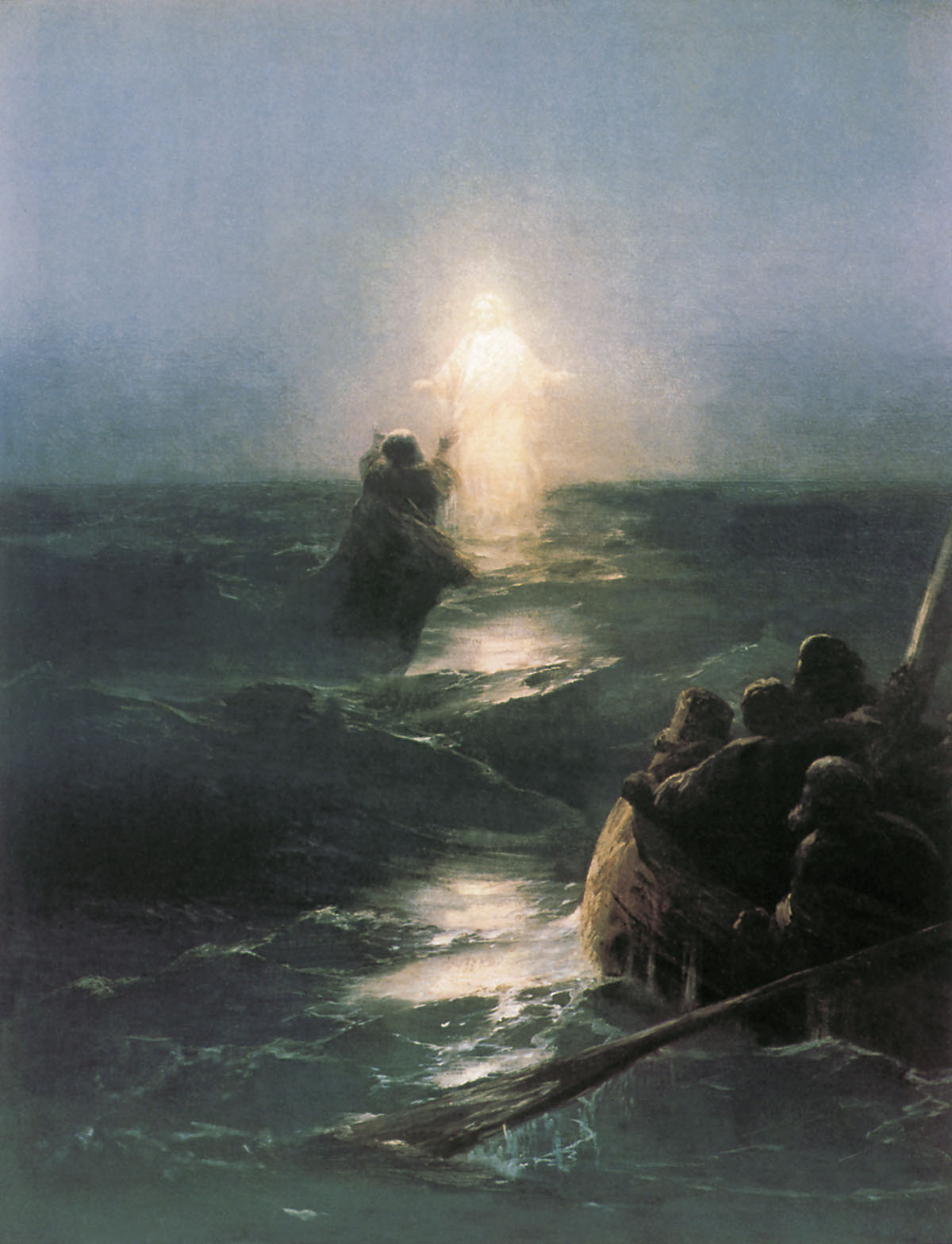



 scribo discere